Knife4j OpenAPI2 的一个隐藏限制:@ApiModel 的 value 千万别加点

问题描述

我们有一个项目使用了 com.github.xiaoymin:knife4j-openapi2-spring-boot-starter:4.4.0 依赖,API 接口的出/入参参数使用了内部类,举个例子

1
2
3
4
5
6
7
8
9
10
11
12
13
@Data
@ApiModel(value = "Outer")
public class Outer {
private String name;

private Inner inner;

@Data
@ApiModel(value = "Outer.Inner")
public static class Inner {
private String name;
}
}

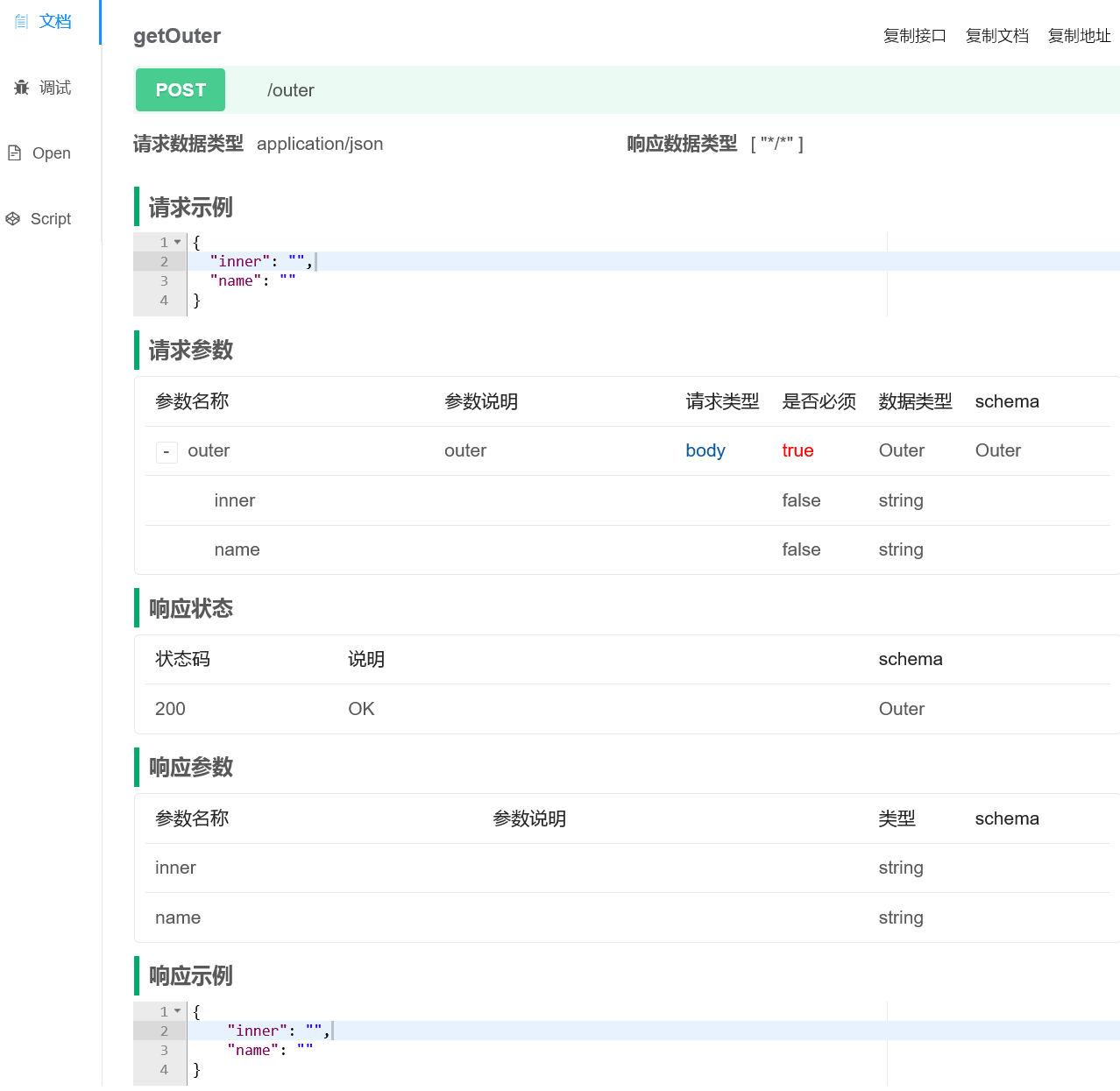
注意第 9 行代码中 value 的值使用了点 . 来分割外部类与内部类的名称,当访问 API 文档时 inner 属性被当成了 string 类型而不是 object 类型
原因分析

一开始怀疑是 Knife4j 文档显示问题,但是当调用 /v2/api-docs 接口查看生成文档的 JSON 数据时,发现第 7 行 $ref 属性缺少了 #/definitions/ 前缀,导致 $ref 值变成了 Outer.Inner 而不是 #/definitions/Outer.Inner。因为 $ref 值是不完整的,Knife4j 无法通过它找到对应的模型定义,从而导致 $ref 值被解析成 string 类型。

1
2
3
4
5
6
7
8
9
10
11
12
13
14
15
16
17
18
19
20
21
22
23
24
25
26
{
"definitions": {
"Outer": {
"type": "object",
"properties": {
"inner": {
"$ref": "Outer.Inner",
"originalRef": "Outer.Inner"
},
"name": {
"type": "string"
}
},
"title": "Outer"
},
"Outer.Inner": {
"type": "object",
"properties": {
"name": {
"type": "string"
}
},
"title": "Outer.Inner"
}
}
}

我们知道在 io.swagger.models.Swagger 中使用 io.swagger.models.refs.GenericRef 来描述 $ref 属性,在构造 GenericRef 对象时会调用 GenericRef#computeRefFormat 来确定引用的格式

1
2
3
4
5
6
7
8
9
10
11
12
13
14
15
16
17
18
private static RefFormat computeRefFormat(String ref) {
RefFormat result = RefFormat.INTERNAL;
if (ref.startsWith("http:") || ref.startsWith("https:")) {
result = RefFormat.URL;
} else if (ref.startsWith("#/")) {
result = RefFormat.INTERNAL;
} else if (ref.startsWith(".") || ref.startsWith("/")) {
result = RefFormat.RELATIVE;
} else if (
relativeRefWithAnyDot &&
!ref.contains(":") && // No scheme
!ref.startsWith("#") && // Path is not empty
!ref.startsWith("/")&& // Path is not absolute
ref.indexOf(".") > -1) {
result = RefFormat.RELATIVE;
}
return result;
}

这个函数 ref 参数的值是在 @ApiModel#value 属性中指定的,在这里为 Outer.Inner。第 10~14 行的条件为 true,因此函数返回 RefFormat.RELATIVE。当调用回到 GenericRef 构造函数后

1
2
3
4
5
6
7
8
9
10
11
12
13
14
15
16
17
18
19
20
21
22
23
public GenericRef(RefType type, String ref, RefFormat format) {
this.originalRef = ref;
if (format == null) {
this.format = computeRefFormat(ref);
} else {
this.format = format;
}

this.type = type;

if (this.format == RefFormat.INTERNAL && !ref.startsWith("#/")) {
/* this is an internal path that did not start with a #/, we must be in some of ModelResolver code
while currently relies on the ability to create RefModel/RefProperty objects via a constructor call like
1) new RefModel("Animal")..and expects get$ref to return #/definitions/Animal
2) new RefModel("http://blah.com/something/file.json")..and expects get$ref to turn the URL
*/
this.ref = type.getInternalPrefix() + ref;
} else {
this.ref = ref;
}

this.simpleRef = computeSimpleRef(this.ref, this.format, type);
}

第 11 行的条件为 false,因此第 19 行 this.ref 的值被设置为 Outer.Inner。这就是在 /v2/api-docs 看到的结果。

然而使用和 Knife4j 相同版本的 io.springfox:springfox-swagger2:2.10.5 测试时,$ref 值被解析成 #/definitions/Outer.Inner,因此 Outer.Inner 被解析成 object 类型。分析两者的依赖关系发现 com.github.xiaoymin:knife4j-openapi2-spring-boot-starter:4.4.0 使用的 swagger-models 版本为 io.swagger:swagger-models:1.6.6,而前者使用的 swagger-models 版本为 io.swagger:swagger-models:1.5.20,在 io.swagger:swagger-models:1.5.20GenericRef#computeRefFormat 函数的实现为

1
2
3
4
5
6
7
8
9
10
11
12
private static RefFormat computeRefFormat(String ref) {
RefFormat result = RefFormat.INTERNAL;
if (ref.startsWith("http:") || ref.startsWith("https:")) {
result = RefFormat.URL;
} else if (ref.startsWith("#/")) {
result = RefFormat.INTERNAL;
} else if (ref.startsWith(".") || ref.startsWith("/")) {
result = RefFormat.RELATIVE;
}

return result;
}

没有进行 relativeRefWithAnyDot 的判断,因此 $ref 值被解析成 #/definitions/Outer.Inner

解决方案

原因讲清楚后解决这个问题就变得比较简单了。方法一是降级 swagger-models 的版本为 io.swagger:swagger-models:1.5.20。方法二是不使用内部类。方法三是使用内部类,但是 value 属性值不带点,比如 @ApiModel(value = "Outer$Inner") 或者 @ApiModel(value = "OuterInner")

完~